

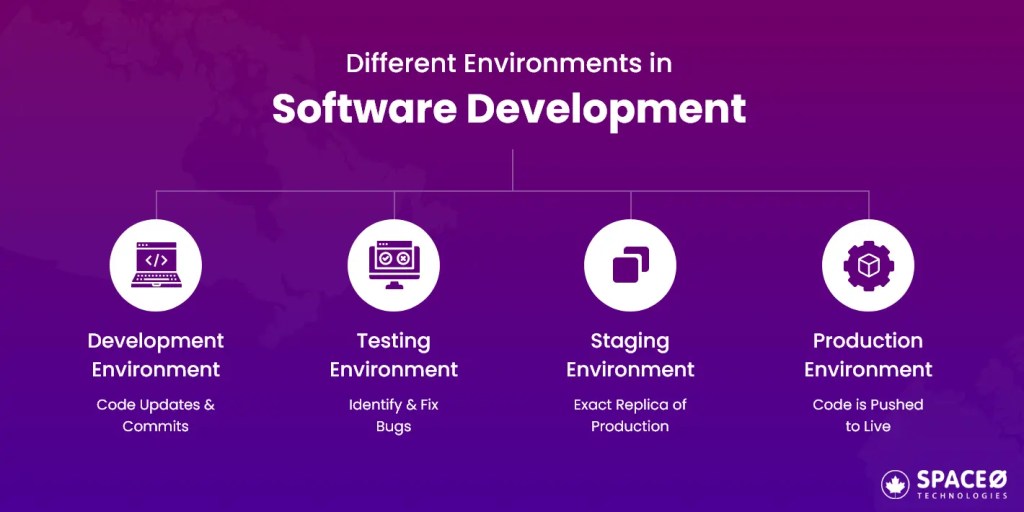
In software development, various environments are established to ensure that applications are built, tested, and deployed effectively. Each environment serves a specific purpose in the development lifecycle:
- Development Environment: This is where developers write and debug code. It allows for experimentation and initial testing without affecting other stages. unitrends.com
- Integration Environment: After individual components are developed, they’re combined in this environment to test how they work together, ensuring seamless integration. statsig.com
- Testing/Quality Assurance (QA) Environment: Dedicated to rigorous testing, this environment ensures the software meets specified requirements and is free from defects. Various tests, including functional, performance, and security, are conducted here. enov8.com
- Staging Environment: Serving as a replica of the production environment, staging is used for final testing before release. It allows teams to identify any last-minute issues in a setting that mirrors the live environment. apwide.com
- Production Environment: This is the live environment where the application is available to end-users. Maintaining stability and performance here is crucial, as any issues can directly impact users. abtasty.com
By utilizing these distinct environments, development teams can systematically build, test, and deploy software, ensuring high quality and reliability at each stage.
 Raphael 's Software Testing's blog